


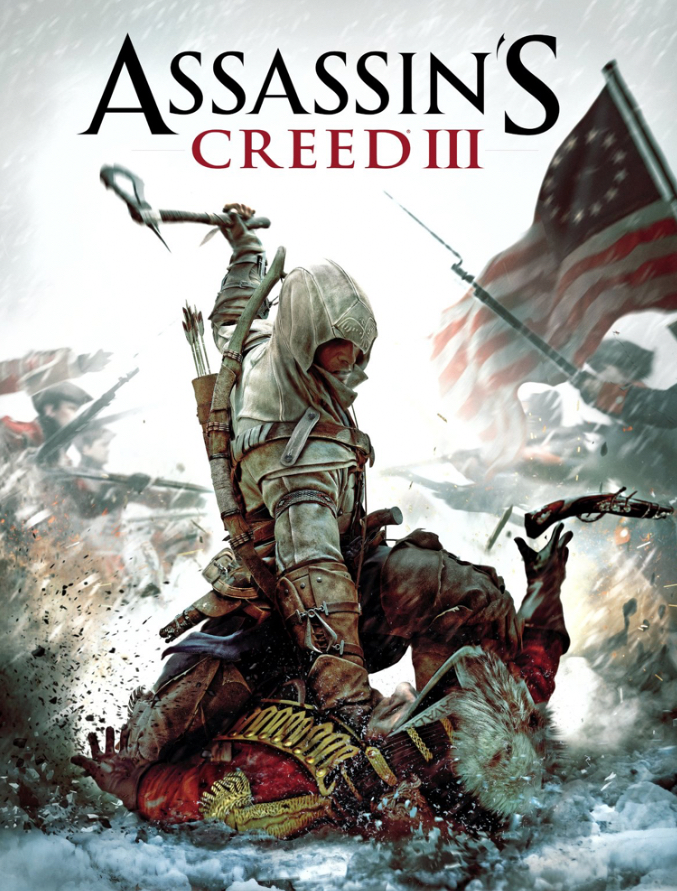

Few franchises in gaming history carry the weight, the mythology, and the sheer atmospheric power of Assassin’s Creed.
From the sun-baked rooftops of Jerusalem to the canals of Renaissance Venice, the series had already built a reputation as one of the most immersive, historically rich, and narratively compelling experiences in all of gaming — and then it arrived on a Java phone, and somehow, impossibly, it still felt like Assassin’s Creed. Assassin’s Creed III Java Game did not ask for your forgiveness for its hardware limitations.
It did not shrink from the franchise’s ambitions or water down its identity to fit a smaller screen. Instead, it took everything that made the series legendary — the stealth, the parkour, the blade-from-the-shadows kills, the conspiracy-laden narrative — and rebuilt it from the ground up for a platform that had no business running it this well.
For an entire generation of fans who experienced the Brotherhood not on PlayStation or Xbox but on a glowing keypad phone during a power cut, a long commute, or a quiet evening with no other entertainment in reach, this was their American Revolution. Their hidden blade. Their moment in the shadows. And it was magnificent.
What Is Assassin’s Creed III Java Game?
Assassin’s Creed III Java Game is an action-stealth title developed by Gameloft for Java-enabled feature phones, released around 2012 to accompany the console and PC launch of Ubisoft’s Assassin’s Creed III. The game follows Connor Kenway — half-Mohawk, half-English assassin — through a turbulent narrative set against the backdrop of the American Revolutionary War.
Players navigate colonial America across a series of story-driven missions that blend stealth infiltration, open combat, parkour traversal, and assassination contracts into a cohesive and genuinely engaging action experience.
The Java adaptation preserved the core identity of the console version with remarkable fidelity — the hidden blade executions, the freerunning movement system, the dual-world narrative connecting Connor’s story to the overarching Assassin versus Templar conflict, and the rich historical atmosphere of 18th century America all translated into the mobile format with care, craft, and evident passion for the source material.
Key Features
Assassin’s Creed III Java Game delivered a content-rich experience that honored the franchise at every turn. The game featured a full story campaign following Connor Kenway across multiple colonial environments including Boston, the frontier wilderness, and key Revolutionary War battlegrounds.
The parkour and free running system allowed fluid movement across rooftops, through forests, and along building facades with a fluidity that felt genuinely athletic for a Java title.
The hidden blade remained the weapon of choice for stealth kills, complemented by the tomahawk for open combat, the bow for ranged assassination, and Connor’s bare-handed combat techniques for close-quarters confrontations.
A stealth system rewarded patient, methodical play — remaining in cover, timing movements between guard patrol patterns, and eliminating targets silently without triggering full alert status. Multiple mission types kept the campaign varied, covering assassination contracts, liberation missions, naval encounters, and story-critical confrontations tied directly to the Revolutionary War narrative. A progression system unlocked new abilities, weapons, and equipment as Connor’s skills developed across the campaign.
How to Play
Basic Controls
Assassin’s Creed III Java Game uses a keypad layout that elegantly handles the game’s dual identity as both a stealth title and an action combat experience:
- 4 / 6 — Move Left / Move Right
- 2 / 8 — Move Forward / Move Backward (in 3D environments)
- 5 — Interact / Parkour / Freerun (context-sensitive)
- 0 — Attack / Hidden blade strike or tomahawk swing
- 7 — Sprint / Freerun activation
- 1 — Enter stealth mode / Crouch and blend into surroundings
- 3 — Counter-attack / Defensive parry
- 9 — Ranged weapon / Draw bow or pistol
- # — Eagle Vision / Highlight enemies and targets through surfaces
- * — Pause / Map and mission access
- OK button — Assassination / Silent kill execution when positioned behind target
Stealth & Assassination Combinations
| Move | Combination |
|---|---|
| Silent Assassination | 1 to crouch + approach from behind + OK button for hidden blade kill |
| Ledge Assassination | Hang from ledge below target using 5 + OK button to pull down silently |
| Aerial Assassination | 7 to sprint + 2 to climb elevated surface + 0 while airborne above target |
| Corner Peek & Kill | Press against wall with 1 + use # to spot guard around corner + OK button as they pass |
| Smoke Screen Escape | 9 to access equipment + smoke bomb deployment + 7 to sprint through confusion |
| Blend & Follow | 1 to enter blend stance near crowd + 4 or 6 to shadow target through populated area |
| Double Assassination | Position between two guards + OK button when both enter simultaneous range |
| Running Assassination | 7 to sprint directly at isolated target + OK button at contact point |
| Whistling Lure | * to taunt or whistle + wait for guard to investigate + OK button from cover |
| Roof Drop Kill | Climb above patrol route with 5 + wait directly above target + 0 to drop strike |
Combat Combinations & Fighting Moves
| Move | Combination |
|---|---|
| Basic Combat Combo | 0, 0, 0 — three-hit tomahawk sequence |
| Counter Kill | 3 precisely as enemy strikes — stuns attacker + 0 immediately for counter kill |
| Disarm & Strike | 3 to counter + hold 0 to strip weapon from enemy and use against them |
| Combat Finisher | 0, 0 + OK button — combo into brutal finishing execution |
| Multi-Target Strike | 0 + 4 or 6 simultaneously to swing weapon in wide arc hitting multiple enemies |
| Hidden Blade Rush | 7 to sprint + OK button at close range for hidden blade running kill |
| Throw & Finish | 5 to grab enemy + 6 or 4 to throw into obstacle + 0 while staggered |
| Ground Execution | 0 to knock enemy down + 1 to crouch over them + OK button for silent finish |
| Ranged into Melee | 9 to shoot leading enemy + immediately 0 to engage remaining enemies in melee |
| Tomahawk Throw | Hold 0 for 2 seconds + release toward distant enemy for ranged tomahawk strike |
Eagle Vision & Tactical Awareness
Eagle Vision is the single most underused tool by new players and the single most important skill mastered by experienced ones. Activating it with # reveals enemy positions through walls and surfaces, highlights assassination targets in gold, marks hostile guards in red, and identifies neutral or friendly characters in blue. Use it at the beginning of every new area before committing to any movement — understanding the full layout of enemy patrol patterns before taking a single step is the difference between a clean, undetected assassination and a chaotic full-alert brawl. Eagle Vision also reveals hidden collectibles, environmental clues tied to mission objectives, and escape routes that are not immediately visible during standard gameplay. It costs nothing to use and provides everything needed to plan a perfect approach.
Stealth Strategy & Patrol Patterns
Patience is the hidden blade of Assassin’s Creed III Java Game — the weapon that never misses.
Every guard in the game operates on a patrol pattern that repeats predictably once observed. Watch the full cycle of at least two complete rotations before committing to an infiltration route. Identify the isolation points in each patrol — the moments when a guard moves away from their colleagues and becomes temporarily vulnerable to a silent approach.
Always prioritize eliminating perimeter guards before advancing toward primary targets, as reducing the number of active patrols shrinks the risk of incidental detection during the final approach.
If detection is triggered, do not panic into open combat — sprint immediately to the nearest elevated surface or dense crowd and break line of sight, allowing the alert status to downgrade before resuming stealth approach. Open combat in this game, while functional and satisfying, is always a last resort. The hidden blade is not just a weapon. It is a philosophy.
Mission Type Guide
Assassination Contracts — The game’s purest missions. A target is identified, a location is given, and the method is entirely at the player’s discretion. Always scout with Eagle Vision first, identify all guards, plan entry and exit routes simultaneously, and execute cleanly. Leaving the area undetected after the kill earns the highest mission rating.
Liberation Missions — Connor fights to free colonial citizens from Templar oppression across specific districts. These missions blend combat and stealth in equal measure and are best approached by clearing outer guards stealthily before engaging central objectives in open combat where necessary.
Naval Encounters — A distinctive mission type unique to Assassin’s Creed III that carries over into the Java version. Control the Aquila warship through enemy naval formations, using cannon fire and evasive maneuvering to sink Templar vessels while protecting allied ships and completing maritime objectives.
Story Confrontations — Narrative-critical missions tied directly to the Revolutionary War and the Assassin-Templar conflict. These are the most cinematic missions in the game, blending parkour sequences, stealth segments, and climactic combat encounters into multi-stage experiences that demand the full application of every skill developed across the campaign.
Why It Still Matters
Assassin’s Creed III Java Game stands as one of the most accomplished mobile adaptations of a major gaming franchise ever produced for Java hardware. It did not merely borrow the name and iconography of a beloved series — it genuinely understood what made Assassin’s Creed feel like Assassin’s Creed and rebuilt those qualities faithfully within the constraints of its platform.
The sense of historical atmosphere, the satisfaction of a perfect stealth kill, the freedom of movement through a living environment, the weight of a conspiracy larger than any single man — all of it was present and all of it was earned.
For the generation that played it on feature phones across cities and towns where consoles were dreams rather than realities, it was not a lesser version of a great game. It was simply a great game — one that happened to fit in a pocket, run on a keypad, and deliver the full promise of the hidden blade to anyone willing to pick it up. Connor Kenway asked no questions about what hardware he ran on. He simply moved through the shadows and made history. So did this game.
“In the shadows of a revolution, on a screen barely bigger than a playing card, an assassin moved. And the Brotherhood was never more accessible — or more alive.”
—————————————————————————
This content is published for review and educational purposes only.
All trademarks, game titles, and related assets belong to their respective owners. We do not host any download files and the links are for respective users.
