



Some games earn their place in history through spectacle. Others earn it through innovation. And then there are games that earn it through something far simpler and far more powerful — the ability to make you forget entirely that time is passing.
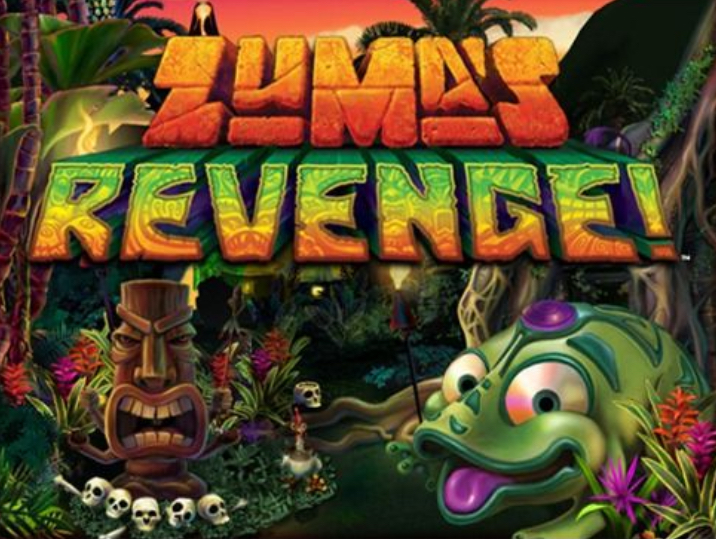
Zuma Revenger Java Game belonged firmly in that last category. Built on the foundation of the original Zuma formula that had already proven itself one of the most addictive puzzle concepts ever designed, Zuma Revenger arrived on Java feature phones with a sharper edge, a faster pace, and a vengeful energy that its predecessor’s more serene Aztec atmosphere had never quite possessed.
The name said everything. This was not Zuma at peace. This was Zuma with something to prove — a mobile puzzle experience that took everything players loved about the original, accelerated it, intensified it, and delivered it with the kind of relentless forward momentum that made putting the phone down feel genuinely difficult.
For the generation of Java phone users who had already surrendered hours to the original Zuma’s spinning frog, Zuma Revenger arrived like a challenge — a direct, unapologetic invitation to step back to the keypad and discover how much deeper the obsession could go.
What Is Zuma Revenger Java Game?
Zuma Revenger Java Game is a puzzle-shooter title developed for Java-enabled feature phones, building directly on the Zuma gameplay concept pioneered by PopCap Games.
The core mechanic remains faithful to its predecessor — a frog or similar shooting mechanism positioned within a stage fires colored balls into a moving chain, and matches of three or more same-colored balls cause chain destruction that must outpace the chain’s advance toward a fatal endpoint.
Where Zuma Revenger distinguished itself was in the layers of additional challenge, new enemy types, evolved stage designs, and a faster, more aggressive overall pace that demanded sharper reflexes and more sophisticated tactical thinking than the original ever required.
The revenge theme infused the game’s visual and mechanical identity with a harder, more urgent atmosphere — this was a puzzle game that felt genuinely threatening in a way its predecessor’s tranquil Aztec temples never had. Stage layouts were more complex.
Chain speeds escalated more aggressively. And the satisfaction of surviving a particularly brutal wave and watching the final balls explode off the screen was, if anything, even more deeply felt than in the game that inspired it.
Key Features
- Enhanced Chain Mechanics — More complex and faster-moving ball chains than the original Zuma, featuring multiple simultaneous chain segments on advanced stages that demanded split attention and rapid decision making.
- New Stage Designs — A full roster of original stage layouts with more intricate track configurations including tighter spirals, crossing paths, and multi-directional chain flows not present in the original game.
- Revenge Mode — A dedicated high-intensity game mode featuring accelerated chain speeds, reduced power-up availability, and stricter survival conditions for players seeking maximum challenge beyond standard stage progression.
- Expanded Color System — Additional ball colors beyond the original Zuma palette increasing matching complexity and demanding faster color recognition and targeting response across advanced stage play.
- New Power-Up Types — Additional special ball variants beyond the original lineup providing new tactical tools and disruption options for managing the increasingly aggressive chain behavior of later stages.
- Enemy Obstacles — New stage hazards and chain-disrupting elements not present in the original, including barrier sections, speed surge triggers, and chain reversal moments that introduced unpredictability into previously learnable patterns.
- Progressive Difficulty Curve — A carefully calibrated escalation from accessible introductory stages through genuinely punishing advanced levels that required mastery of every available mechanic to survive.
- Score Multiplier System — An enhanced combo and chain scoring architecture rewarding sustained accuracy and gap-shot precision with escalating multipliers beyond the original game’s scoring structure.
- Survival Mode — An endless wave format with no predetermined endpoint, testing how long players could sustain accurate shooting against continuously accelerating chain behavior with diminishing power-up support.
- Visual Identity — A darker, more aggressive visual aesthetic than the original Zuma’s golden temple atmosphere, reflecting the revenge theme through sharper color contrasts and more intense stage environments.
How to Play
Basic Controls
- 4 / 6 — Rotate shooter Left / Right to aim
- 5 or 0 — Fire current ball at aimed position
- 2 — Swap current ball with next ball in queue
- 7 — Activate power-up ball if currently loaded
- 1 / 3 — Fine-tune aim left / right for precision targeting
- 8 — Reverse shot where stage layout permits
- 9 — Zoom view on larger stage layouts
- # — Pause current stage
- * — View score and stage progress
- OK button — Confirm menu selections between stages
Core Combinations & Shot Techniques
| Technique | Combination |
|---|---|
| Basic Color Match | Rotate with 4 or 6 + fire with 5 into matching color group of three or more |
| Gap Shot | Aim through opening in chain + 5 to fire into cluster on far side |
| Revenge Chain Combo | Land three consecutive matches within two seconds for score multiplier activation |
| Cross-Path Shot | On stages with crossing chains — time 5 fire to hit both chains simultaneously with single ball |
| Power-Up Snipe | 7 to activate power-up ball + 1 or 3 for precision targeting on densest chain section |
| Ball Swap Decision | 2 to swap when queued ball creates better immediate match than current loaded ball |
| Cascade Setup | Fire match that closes gap + allow chain reconnection + new automatic match forms |
| Reverse Chain Attack | 8 reverse shot + 5 to fire ball traveling against chain direction into rear cluster |
| Speed Surge Survival | During chain speed acceleration — prioritize largest color clusters over precision gap shots |
| Multi-Chain Split | On dual-chain stages — alternate fire between chains to prevent either from advancing critically |
| Last Defense Clear | Target largest color cluster nearest endpoint with fastest available shot when chain approaches danger zone |
| Combo Extension | After successful match — immediately aim next shot before chain repositions to maintain combo timing |
Power-Up Guide
Slowdown Ball — Reduces chain speed for several seconds. Most valuable during Revenge Mode’s accelerated chain phases and on advanced stages where normal chain speed already challenges comfortable response time. Never use it during early stage segments where chain speed remains manageable — preserve it for genuine crisis moments.
Explosion Ball — Destroys a wide radius of chain balls on contact. The single most powerful tool in the game. Reserve it exclusively for dense mixed-color sections that resist systematic color matching, or for emergency use when the chain enters the danger zone faster than conventional shooting can address.
Accuracy Ball — Enlarges the effective target area for each shot temporarily. Deploy during complex spiral sections where tight chain curves make gap shots technically demanding under time pressure.
Color Change Ball — Transforms the color of nearby chain balls to match the current fired ball, enabling matches in sections where target colors are isolated by surrounding different colors. Most effective on multi-color chain tangles in advanced stages.
Chain Reversal Ball — Pushes the entire chain backward away from the endpoint for a brief period. Extraordinarily valuable on stages where the chain has advanced dangerously close to the skull — buys critical recovery time to restore comfortable chain distance before resuming normal color-match play.
Revenge Mode Strategy
Revenge Mode is where Zuma Revenger separates casual players from genuine masters. Chain speeds are significantly higher than standard play, power-ups appear less frequently, and the penalty for hesitation is immediate and severe.
Three principles determine survival in this mode above all others. First — gap shots over standard matches. A gap shot that destroys ten balls with a single fired ball is the only way to keep pace with chains moving faster than consecutive single matches can address.
Second — ball swap discipline. Always check the queued ball before firing and swap with 2 whenever the queue ball creates a better immediate match than the loaded ball. In Revenge Mode the difference between the right ball and the wrong ball is frequently the difference between chain control and chain crisis.
Third — combo maintenance. Every successful match in Revenge Mode must be immediately followed by the next aimed shot before the chain repositions — maintaining combo timing is the only scoring strategy that accumulates points fast enough to justify the difficulty Revenge Mode imposes.
Stage Progression Strategy
Early Stages — Use these to master the fundamental rotation and firing rhythm without time pressure. Practice gap shots deliberately rather than defaulting to standard front-of-chain matches — gap shot accuracy built in early stages pays significant dividends when later stage chain speeds make front matching impractical.
Mid Stages — Chain speeds increase and stage layouts introduce crossing paths and multi-segment configurations. Begin managing power-up balls strategically — identify the stage section where each power-up will deliver maximum value rather than deploying immediately upon receipt.
Advanced Stages — Survival requires simultaneous tracking of multiple chain segments, consistent gap shot execution under pressure, and emergency power-up deployment with precise timing. Accept that these stages will end in failure during early attempts and treat each attempt as pattern learning rather than genuine survival effort until chain behaviors and layout configurations become sufficiently familiar to navigate reliably.
Survival Mode — Abandon all thoughts of comfort or routine. Survival Mode’s endless escalation means no strategy remains effective indefinitely — adapt continuously, prioritize the most dangerous chain segment at every moment, and accept that the mode’s only honest objective is outlasting your own previous best performance.
Get game | JAR
Why It Still Matters
Zuma Revenger Java Game proved something important — that a great game concept does not expire. It evolves. It challenges the players it has already captured to go deeper, move faster, and think more precisely than they ever needed to before.
For Java phone users who had already given weeks of their attention to the original Zuma, this game arrived as a worthy successor that respected that investment completely.
It did not simply repeat what the original had done. It raised the standard, sharpened the demand, and delivered a puzzle experience that was harder, faster, and ultimately more satisfying precisely because it never once made the mistake of being easy.
The frog had been through the temples. Now it was time for something more demanding. And on Java phones across the world, millions of players answered that demand with exactly the dedication the game deserved.
“Zuma gave you a puzzle. Zuma Revenger gave you a reckoning. And the only way through was to be better than you thought you were.”
—————————————————————————
This content is published for review and educational purposes only.
All trademarks, game titles, and related assets belong to their respective owners. We do not host any download files and the links are for respective users.
